
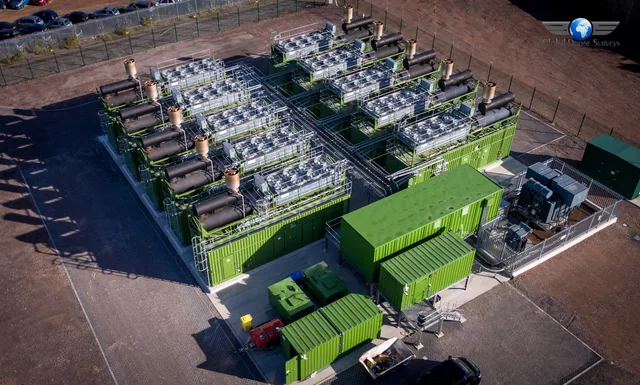
Utilities
Assessing counter-UAS security arrangements for energy, water and nationally important infrastructure.

Your organisation has invested in Counter-UAS technology. But has its effectiveness been independently validated?
Global Drone Surveys assesses detection systems, operational readiness and security response through confidential, authorised testing.
GDS provides specialist Counter-UAS consultancy, independent testing and operational assurance across the UK, helping organisations evaluate existing detection systems, personnel readiness and operational procedures.
Global Drone Surveys is led by directors whose professional backgrounds include military operations, national resilience and international UAV threat simulation within the defence sector. Our leadership team brings experience of working on sensitive projects and within security-controlled environments.
This experience provides a practical understanding of realistic drone threats, operational decision-making and security response. Relevant personnel suitability and access requirements can be discussed through appropriate client assurance procedures, where disclosure is authorised.
Assessing counter-UAS security arrangements for energy, water and nationally important infrastructure.

UAV threat assessment and operational assurance for ports, harbours, shipping terminals and critical logistics facilities.

Security testing and operational assurance for sporting venues, stadium operators and major arenas.

UAV risk assessment and preparedness reviews for concerts, festivals, major gatherings and temporary event locations.

Discreet counter-UAS security assessment and preparedness support for high-profile individuals, private venues and fixed locations.
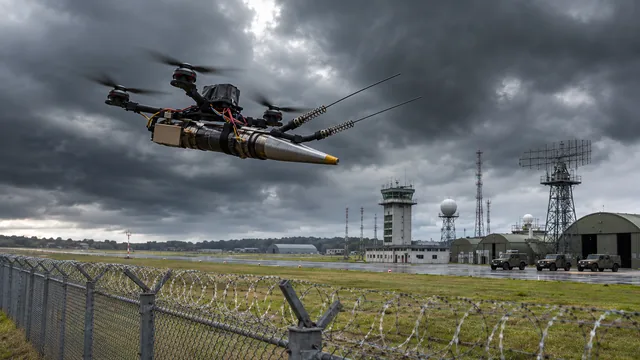
Specialist operational assurance for authorised defence, government and security-sensitive environments.
Detecting a drone is only the first stage of an effective C-UAS response. An alert must be recognised, assessed and communicated before an informed, proportionate and lawful response can take place.
GDS evaluates how detection arrangements integrate with the client's wider security strategy, operational response plans and defined responsibilities. Controlled exercises examine communication, escalation, decision-making and incident recording, identifying gaps between documented procedures and actual personnel performance.
This helps establish whether the existing technology, personnel and procedures can collectively support the intended operational response.
Review protective measures, detection arrangements, procedures, operational responsibilities and security requirements.
Validate installed detection and alerting arrangements against agreed scenarios. Any live exercise is planned under written site authority, aviation requirements and safe systems of work.
GDS consultancy supports the development and review of Counter-UAS standard operating procedures (SOPs), incident-response plans and operator responsibilities. Controlled exercises or tabletop simulations help assess whether reporting, escalation and decision-making procedures work effectively in practice. Live flying and mitigation activities are undertaken only where separately lawful, authorised and appropriate.
Effective Counter-UAS (C-UAS / CUAS) testing evaluates how existing technology, personnel and operational procedures perform together under controlled conditions.
GDS assesses installed detection capabilities, including RF, radar, electro-optical/infrared (EO/IR), acoustic and integrated multi-sensor systems, where applicable. Testing examines detection consistency, alert accuracy, notification times and system limitations against agreed objectives and documented Operational Requirements (ORs), where available.
Alongside technical performance, GDS audits personnel against the client's established standard operating procedures (SOPs), assessing whether alerts are correctly acknowledged, assessed, reported and escalated.
Findings identify gaps between specified requirements, observed system performance and procedural compliance, providing evidence-based recommendations for corrective action, training and further validation.
For wider commercial asset requirements, explore our Industrial & Infrastructure Drone Inspections services.
We assess operator preparedness, training, incident reporting and coordination with police or command structures where relevant. Our findings show whether personnel and procedures can deliver the intended response after a UAV threat is detected.
Before testing, GDS agrees the assessment objectives, written site authority, applicable aviation requirements, responsibilities, safety arrangements and information-handling procedures.
C-UAS assessments are planned around the client's existing security arrangements and the agreed scope of work. CAA Open Category registration alone does not authorise restricted airspace access or activities requiring separate legal permissions.
UK NPSA guidance recommends testing and exercising Counter-UAS response plans to assess the readiness of people, procedures and technology. Department for Transport guidance also recommends regular drone-threat drills for maritime operators.
GDS assessments support these principles through independent capability reviews, controlled testing and operational assurance.
Depending on scope, a confidential report may include:
Our leadership team brings experience of working on sensitive projects and within security-controlled environments. Relevant personnel suitability and access requirements can be discussed through appropriate client assurance procedures, where disclosure is authorised.
Discuss your security requirementsExplore pages from a fictional stadium assurance demonstration in this seven-page public preview.
View Public PreviewFictional demonstration only. No real venue, customer engagement or operational test is represented. Select a panel for a larger view or open the seven-page public preview.
This public preview introduces our Counter-UAS testing and operational assurance approach. For a more comprehensive example covering assessment findings, procedural assurance and continuous-improvement recommendations, please contact Global Drone Surveys.
Request the Full ReportInstalling equipment provides a potential detection capability. Independent testing examines whether it performs in the intended environment and whether people and procedures respond effectively to its alerts.
Yes. GDS provides independent Counter-UAS (C-UAS / CUAS) consultancy to review installed detection capabilities, personnel procedures and operational readiness against agreed objectives. Findings inform evidence-based improvements; assessment scope and permissions are agreed in advance.
CUAS testing, also written C-UAS testing, reviews the whole detection-to-response process: technology, responsibilities, decisions, handovers, incident records and corrective actions. The assessment scope is agreed with the client in advance.
Yes. Interviews, procedure reviews, system records, simulations and tabletop exercises can reveal gaps. A live exercise is considered only where it is lawful, safe and separately authorised.
Requirements depend on the location and activity. Written site authority, airspace assessment, flight permissions where needed, safety controls and stakeholder coordination are considered before a live test. CAA Open Category registration does not by itself authorise specialist Counter-UAS activities.
Depending on scope, the confidential report can cover methodology, system and procedural observations, detection-to-response findings, limitations, a findings register and prioritised corrective actions.
Potentially, subject to site suitability, permissions, access requirements and a mutually agreed scope. Personnel suitability and information-handling requirements can be discussed through the client’s assurance process.
Use the consultation form below to outline the type of site and a general objective. Please do not include sensitive coordinates, system details or vulnerabilities in the initial enquiry.
Discuss your security requirements with our team in confidence. We will provide a discreet initial discussion to explore the most appropriate assessment approach for your site, event or organisation.
Please avoid sensitive coordinates, system details or vulnerabilities in this initial enquiry.